

Pile or raft foundations: which one do you need?
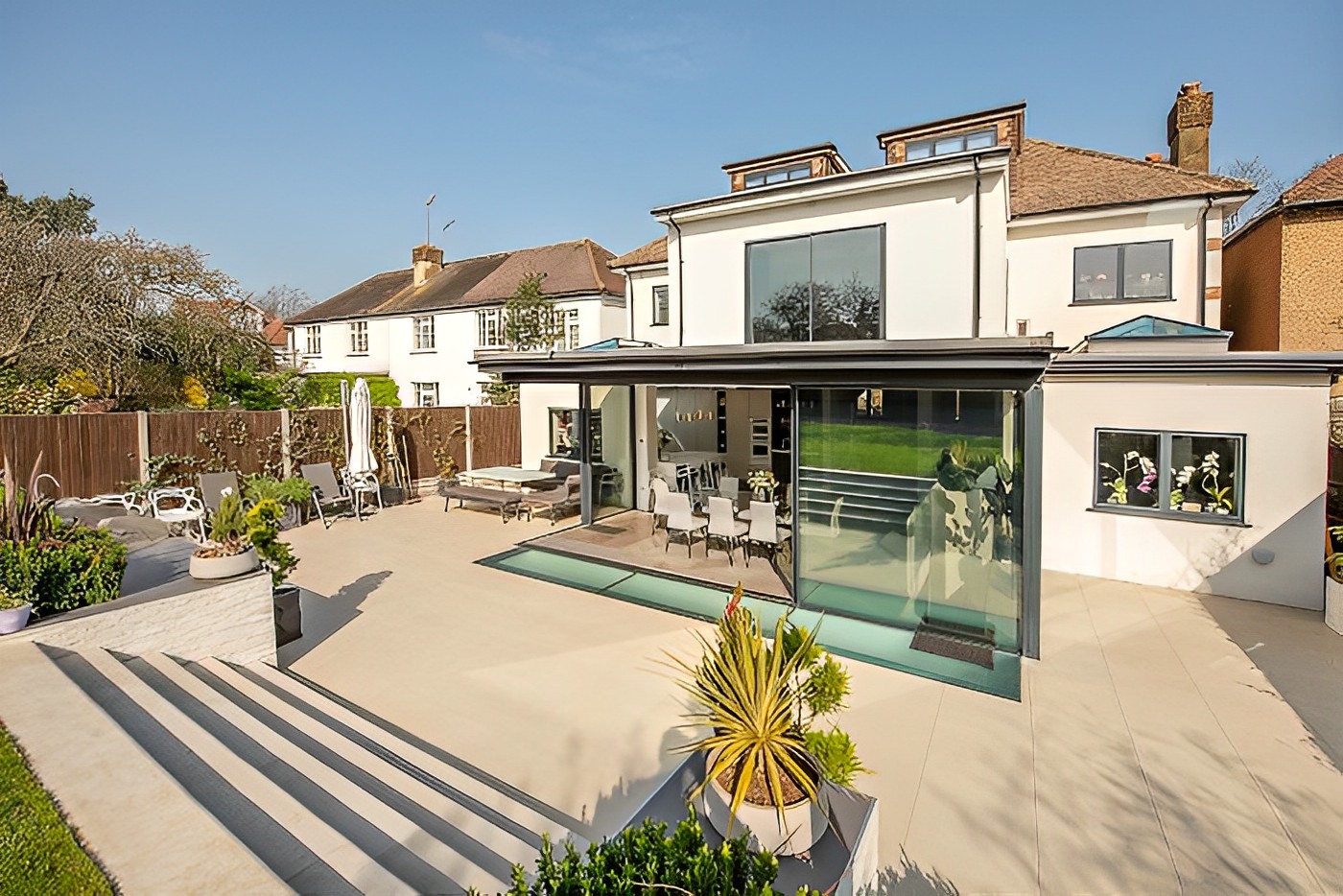
For most extensions, a standard strip or trench fill foundation is fine. It's simple and cheap. But on poor ground, or close to trees on clay, your engineer might suggest a raft or piles instead.
It depends on the ground
A lot of London, Essex and Kent is on clay, which shrinks and swells as it dries out and gets wet again. Trees make that worse, because their roots pull water out of the soil. Made ground, very soft soil and a high water table can all cause problems too. Trial pits or a site investigation tell us what we're dealing with.
Trench fill
A trench is dug down to firm ground and filled with concrete. Near trees on clay, building control may need it to go a lot deeper, sometimes two or three metres. At that point it can be cheaper to do something else.
Raft
A raft is a reinforced concrete slab under the whole extension. It spreads the weight over a large area, so it suits soft or uneven ground where deep trenches would be expensive. The edges and the drainage runs need careful detailing.
Piles
Piles take the load down to firmer ground further below, and are connected at the top by concrete ground beams that the walls sit on. Mini piles are often used for extensions, especially with nearby trees, soft made ground or tight access.
Existing houses
If an existing house has moved, or you're putting more load on it, the old foundations may need underpinning to make them deeper or stronger.
We design all of these, along with retaining walls, and provide the calculations building control will ask for. Contact us if you'd like us to look at your site.